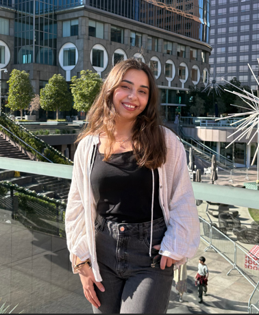
As I wrap up my internship at Toshiba, I have been reflecting on how far I have come throughout this two-month journey. I learned many new things, applied my theoretical knowledge to real-world systems, and developed a much better understanding of how control theory, signal processing, firmware, and physical hardware come together in an industrial environment. It has been a challenging, rewarding, and memorable experience.
When I first joined Toshiba’s HDD Servo Team, this was my first opportunity to see how control systems, C++, MATLAB, and electronics are integrated into a complex, high-performance servo system. At the beginning of the internship, I had to familiarize myself with a large firmware codebase, new development and measurement tools, and engineering workflows that were very different from the smaller projects I had previously completed.
Throughout the summer, I worked on frequency-response and Bode measurements, multi-rate sampling, DFT-based signal processing, and simulation tools. I had the opportunity to explore how an excitation signal is generated and injected into a real system, how the resulting response is measured, and how that response is transformed into meaningful frequency-domain information. This allowed me to connect equations and concepts that I had previously encountered in class with the behavior of an actual electromechanical system. I could see how they affected real measurements and how a small incorrect assumption could change the interpretation of an entire result.
One of the most important lessons I learned was that when a result looked unexpected, the cause could come from many different layers: the physical system, the firmware configuration, the excitation path, the sampling rate, the data-processing method, etc. I learned to trace the entire path, from the hardware and embedded firmware to the collected data and final analysis, before drawing a conclusion.
During my internship, I became more comfortable explaining what I had tested, what the evidence showed, what remained uncertain, and what I planned to investigate next. I learned that asking clear and specific questions often requires a significant amount of preparation. It is important to understand the problem well enough to communicate not only that something is not working, but also what has already been checked and what information is still missing.
Beyond the technical experience, I am incredibly grateful to the people who made this internship so meaningful. I am especially thankful to my manager, Feei Chung, for being welcoming and kind from day one and for always supporting me throughout the internship. I am also very thankful to Eric Dunn, Alfred Chang, and Akash Singhal for always being there to guide me, answer my many questions, and help me become a better engineer. Starting in a new company and joining a highly technical team can feel intimidating, but having a team who created a welcoming environment made the transition much easier for me.
My time at Toshiba has been a wonderful balance of gaining new technical skills and being surrounded by brilliant, welcoming, and genuinely kind people. I also want to thank my fellow interns, who made our lunch breaks (and the entire internship experience) much more fun.
I am very happy that I had the opportunity to explore servo engineering and work in a field that closely matches my interests in control systems and signal processing. This internship strengthened my interest in these areas and helped me better understand the type of engineering work I would like to continue exploring.
Thank you to the entire R&D team for making these two months such a rewarding and memorable experience. I am truly grateful that I had the opportunity to begin this part of my journey with all of you.